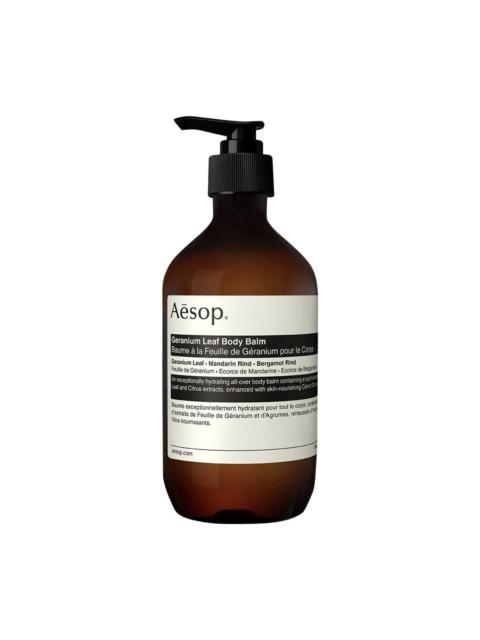
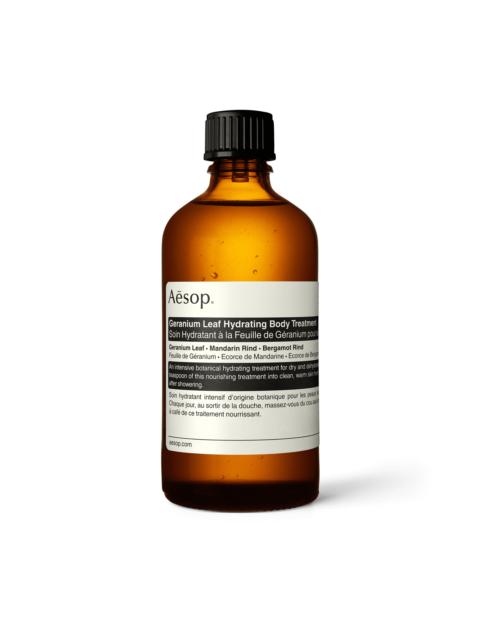
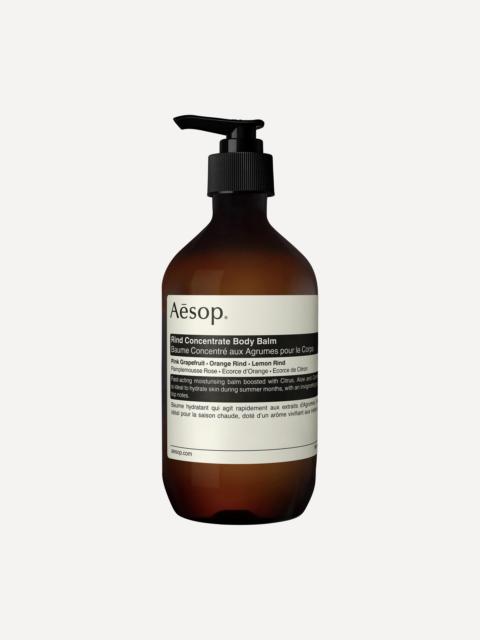
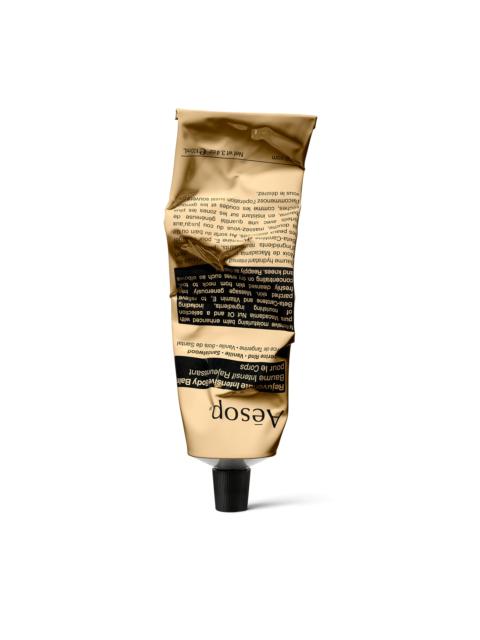
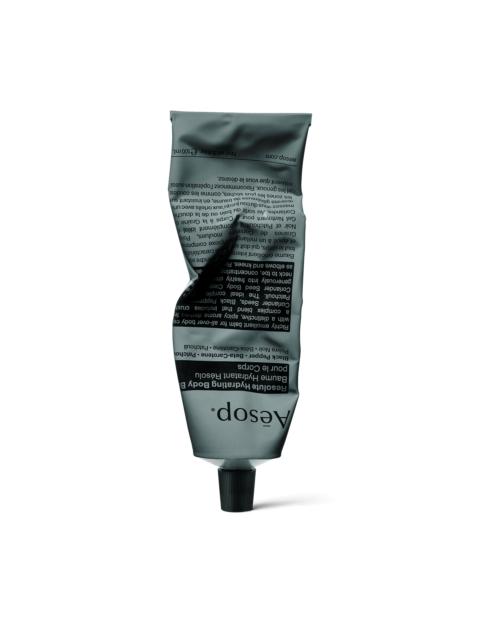
AesopGeranium Leaf Body Balm


Lookbook
Description
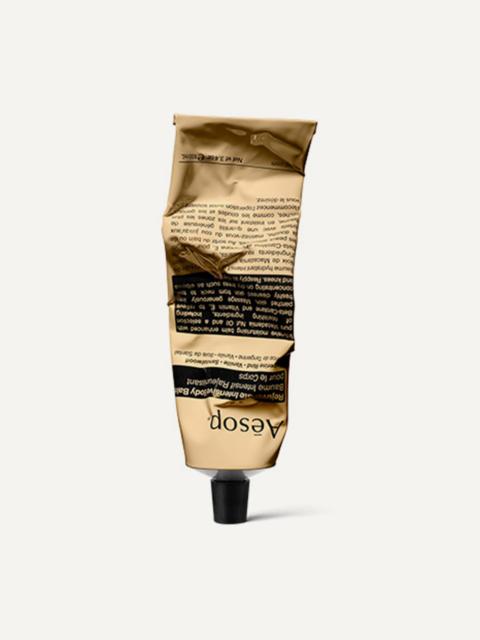
The readily absorbed cream formulation contains a blend of nourishing botanicals, including Macadamia Nut Oil and Coconut Oil and Butter, alongside hydrating Glycerine and Aloe Vera to leave the skin softened and smooth. A stalwart of the Aesop range, it is suited to a wide range of skin types. Skin feel: Supple, soft, hydrated Aroma: Green, fresh, citrus Key ingredients: Geranium Leaf, Mandarin Rind, Bergamot Rind Water (Aqua), Glycerin, Prunus Amygdalus Dulcis (Sweet Almond) Oil, Stearic Acid, Cetearyl Alcohol, Ceteareth-20, Cocos Nucifera (Coconut ) Oil, Macadamia Ternifolia Seed Oil, Glyceryl Stearate, Citrus Aurantium Bergamia (Bergamot) Fruit Oil, Citrus Nobilis (Mandarin Orange) Peel Oil, Pelargonium Graveolens Extract, Tocopherol, Aloe Barbadensis Leaf Juice, Butyrospermum Parkii (Shea Butter), Phenoxyethanol, Theobroma Cacao (Cocoa) Seed Butter, Triticum Vulgare (Wheat) Germ Oil, Glycine Soja (Soybean) Oil, Disodium EDTA, Benzalkonium Chloride, Daucus Carota Sativa (Carrot ) Root Extract, Beta-Carotene, d-Limonene, Linalool, Citronellol, Geraniol, Citral. Contains nut derivatives. This ingredient list is subject to change. Prior to use, please refer to the product label for the most accurate information. All Aesop products are vegan. We only use ingredients with a proven record of safety, efficacy and sustainability. Tubes are made from 100% recycled aluminium. Aluminium tubes are recyclable. Please separate the cap and place components in the recycling bin. 500 mL bottles are made from a minimum of 97% recycled plastics. Many of the Aesop product packaging components are recyclable. We recommend disassembling (removing product labels, pumps and caps) and sorting the components. Product bottles and jars may be recycled. Product labels, pumps, pipettes and caps should be placed in the waste bin. Pumps and pipettes may also be reused.
Product details provided by: Aesop
Product IDs
- REVERSIBLE ID
- 693713670
- Brand style ID
- 9319944000573