

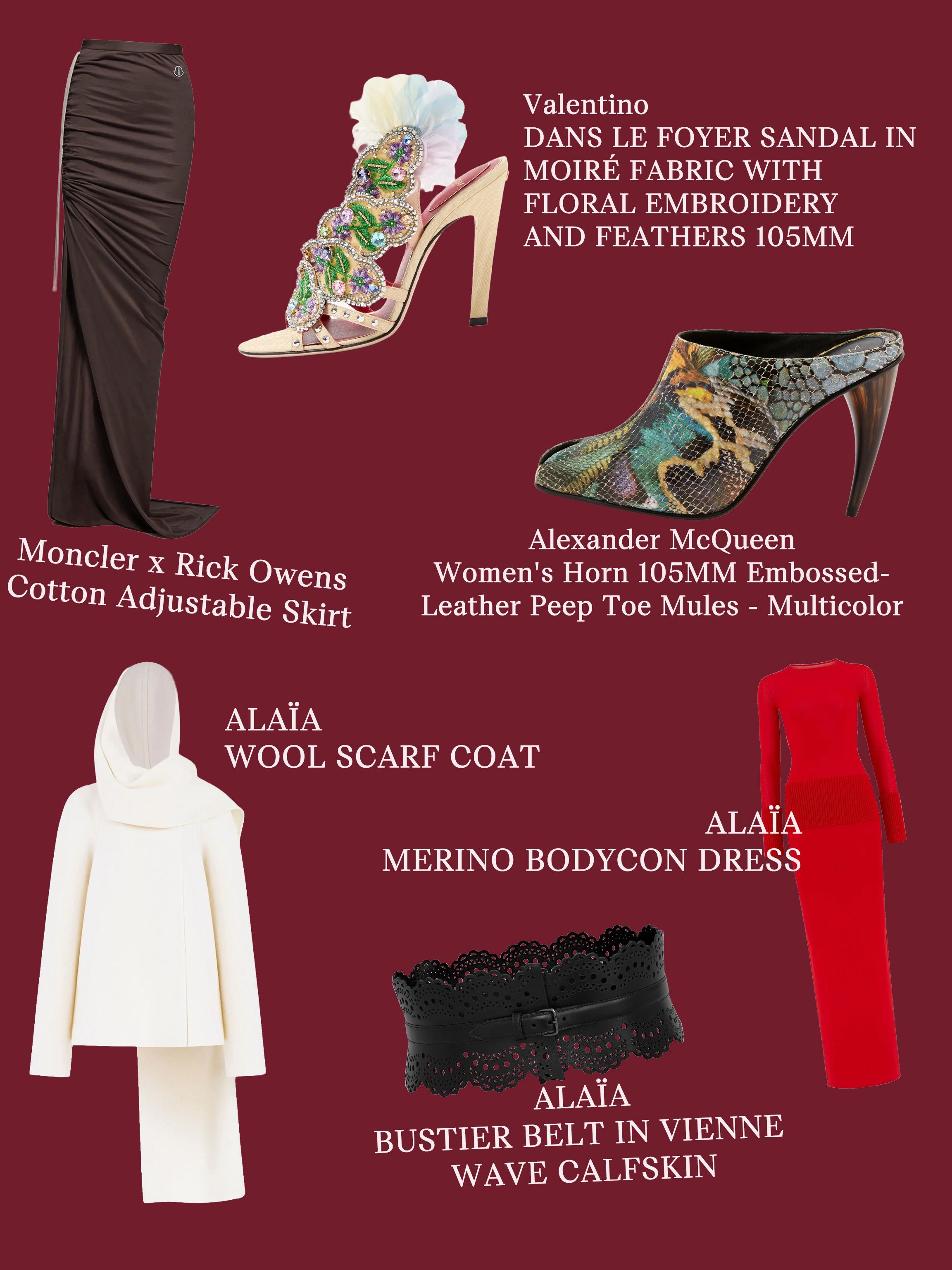
From witches to latex, why does fear look so good?
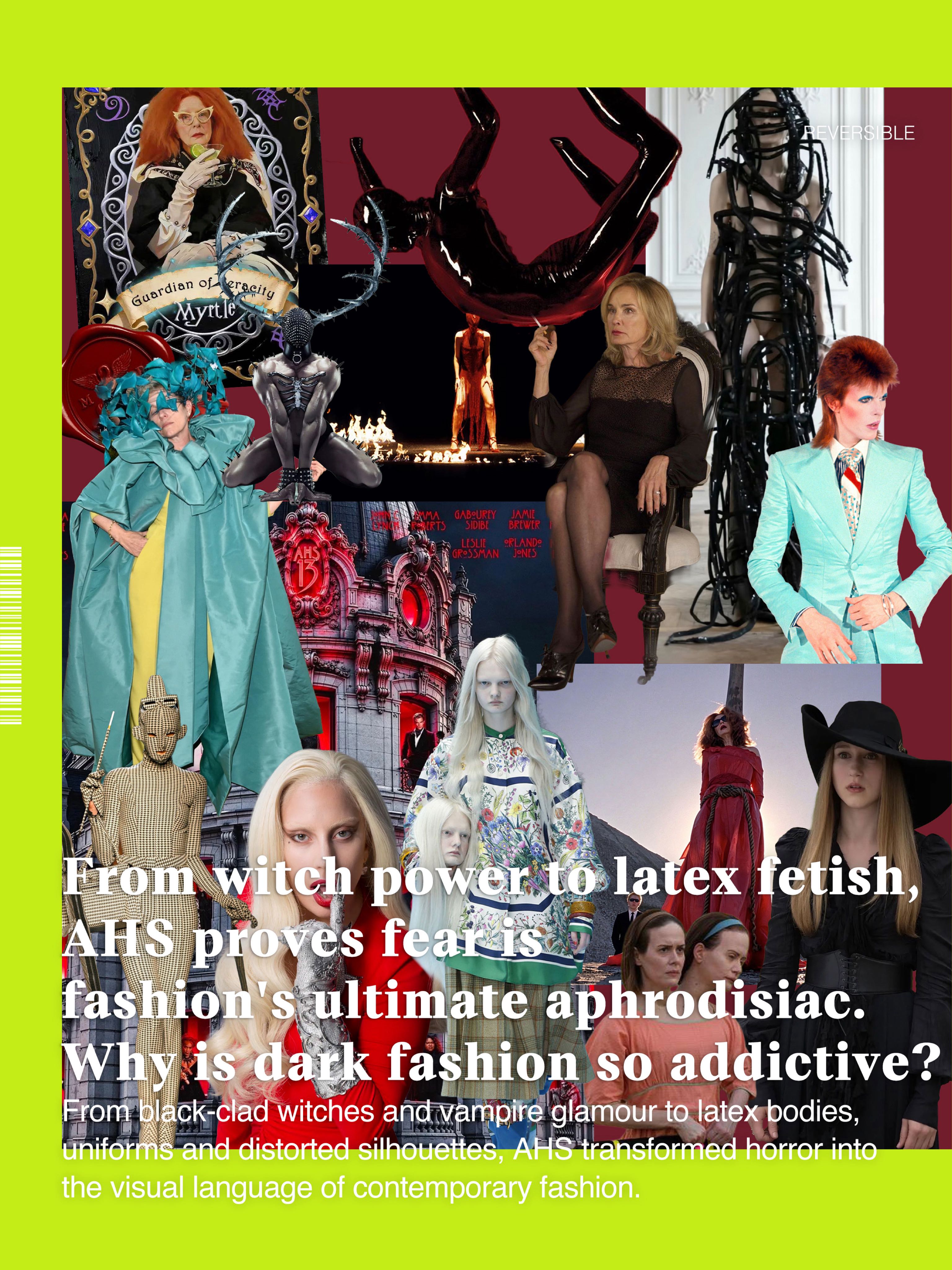
American Horror Story didn’t invent witchcraft, vampires, or latex. It translated avant-garde horror into a mainstream visual language.
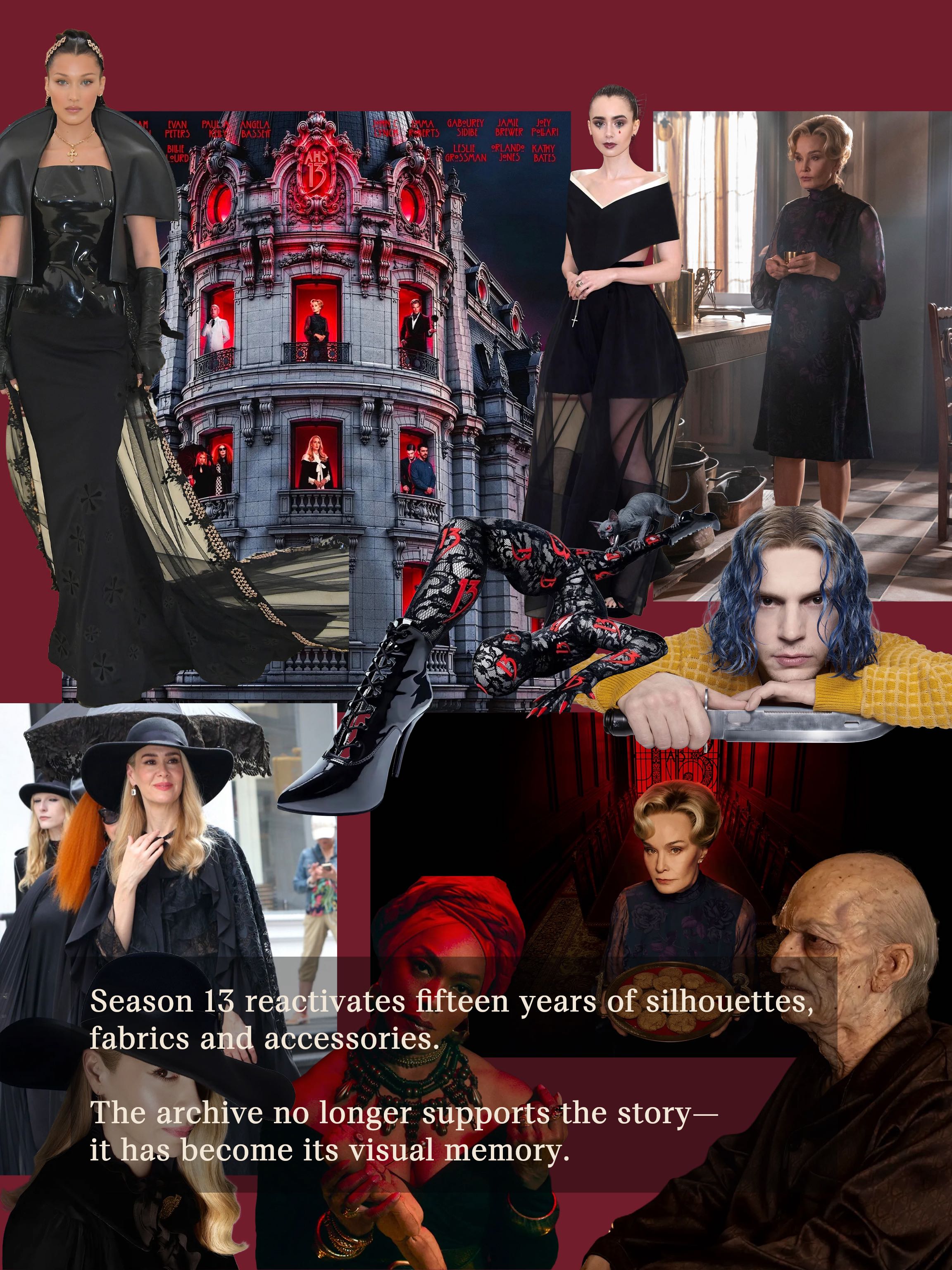
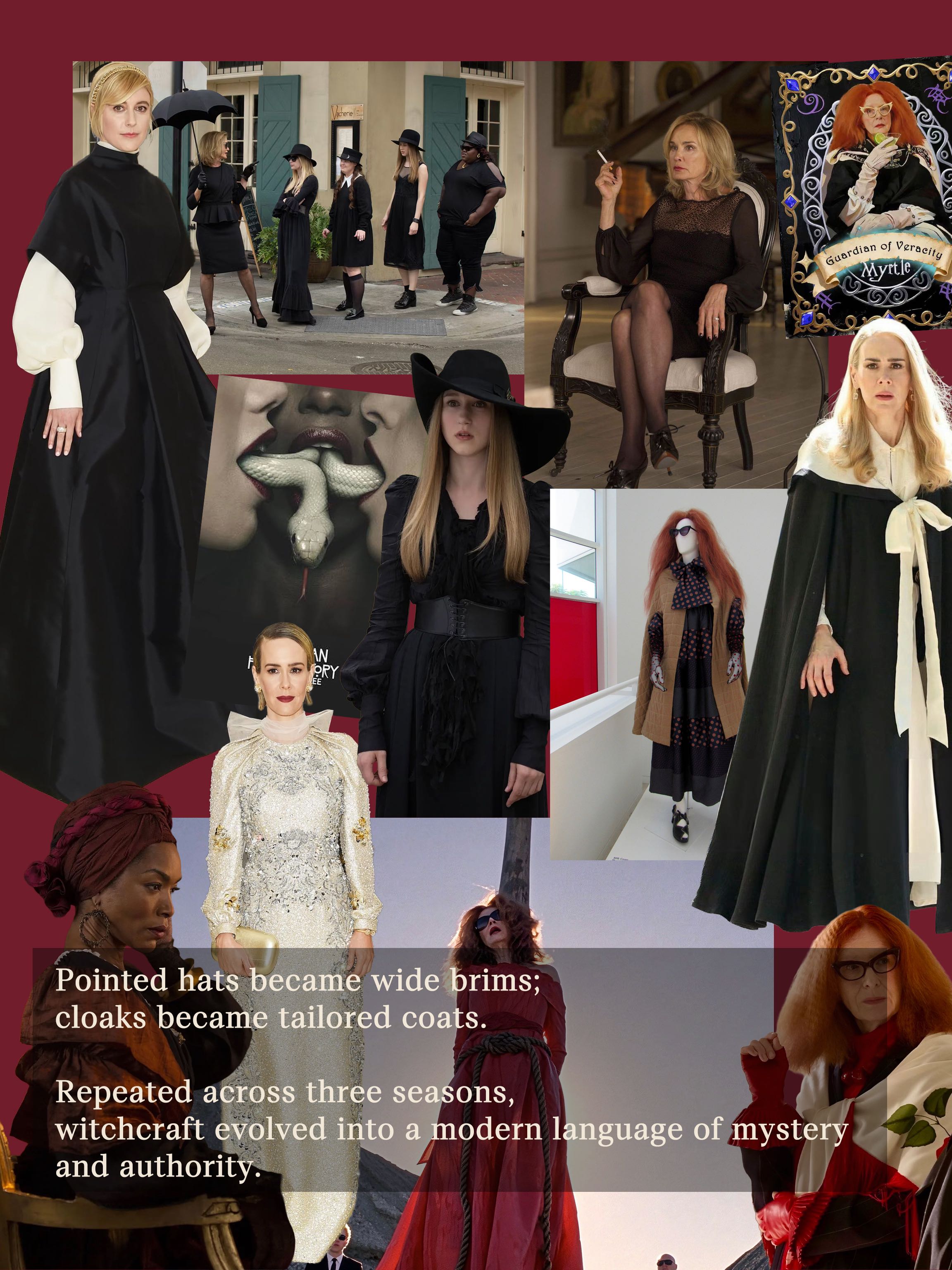
The Coven arc is a masterclass in power dressing. Fiona Goode’s all-black wardrobe wasn't just villain styling; it was authority draped in Chanel. Myrtle Snow’s final cry of “Balenciaga” proved fashion as intellectual devotion. By Season 13, this evolves into the “aspirational witch”—sharp shoulders and sculptural silhouettes.
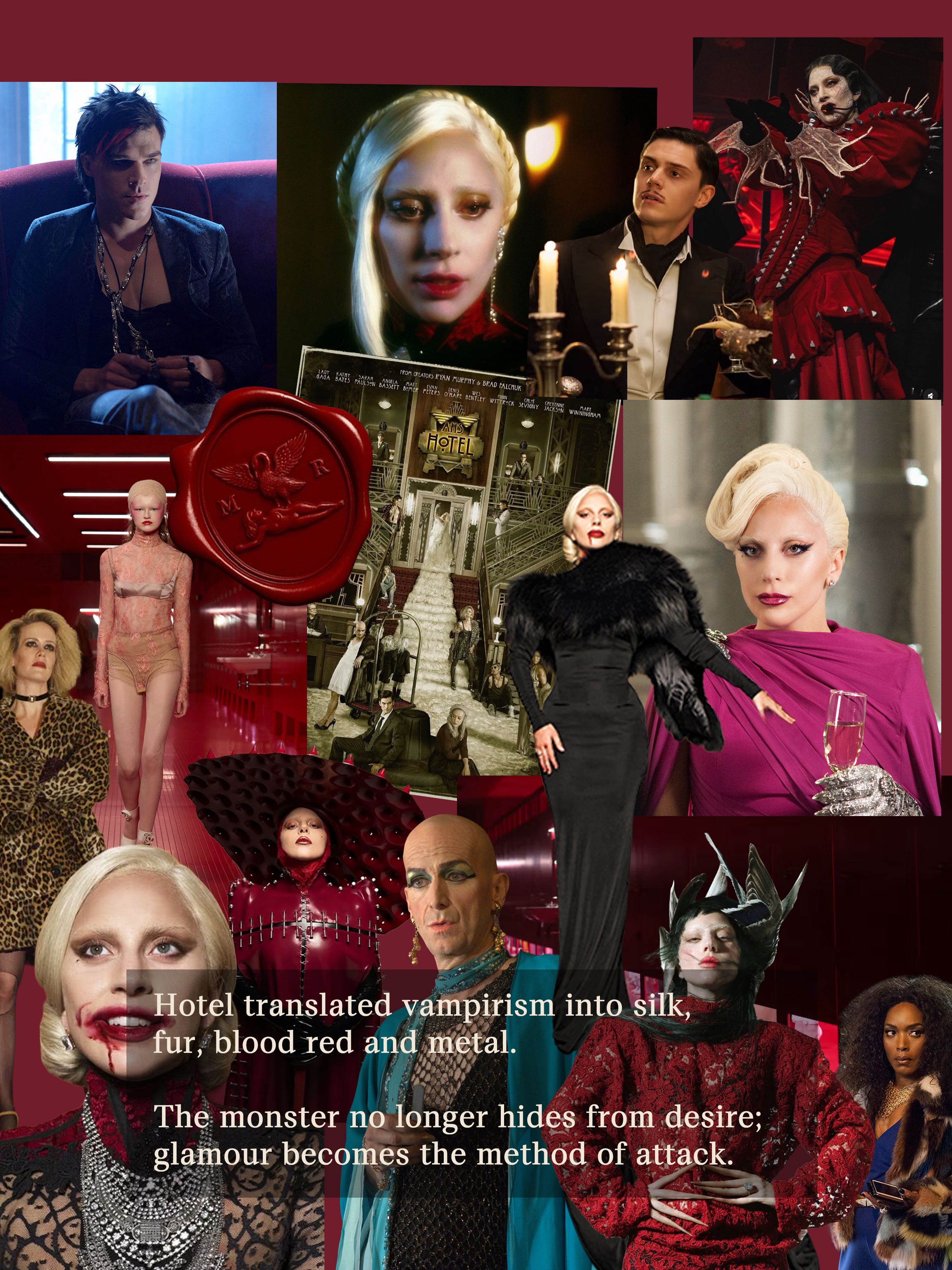
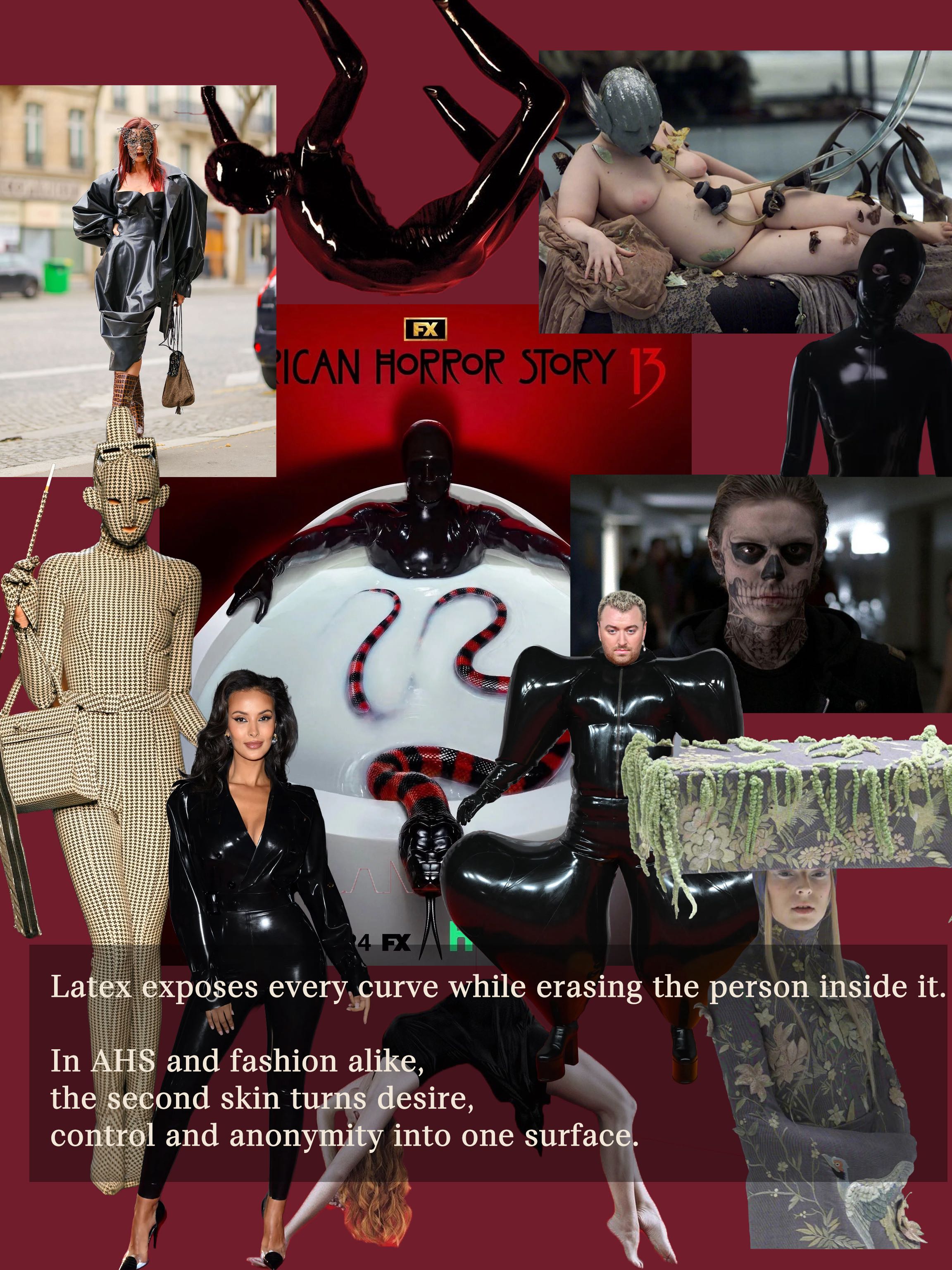
Hotel gave horror an Art Deco vocabulary. Blood became red silk. Fangs became metal jewelry. Danger became desirable in fur and diamonds. Meanwhile, the Rubber Man used black latex to amplify sex, control, and anonymity, blurring the line between fetish clubs and high fashion.
This visual DNA is rooted in the runway. Rick Owens’ FW16 explored surgical horror, while Alexander McQueen’s SS96 staged a literal vampire erotic. AHS absorbed that language—the armor and distortion—and made it legible to millions.
Season 13 reads less like a revival and more like a fashion house reopening its archive. AHS didn’t make horror pretty; it made the disturbing wearable.
If you could steal one AHS wardrobe, whose is it? 👇
Explore more inspiration stories on #reversible

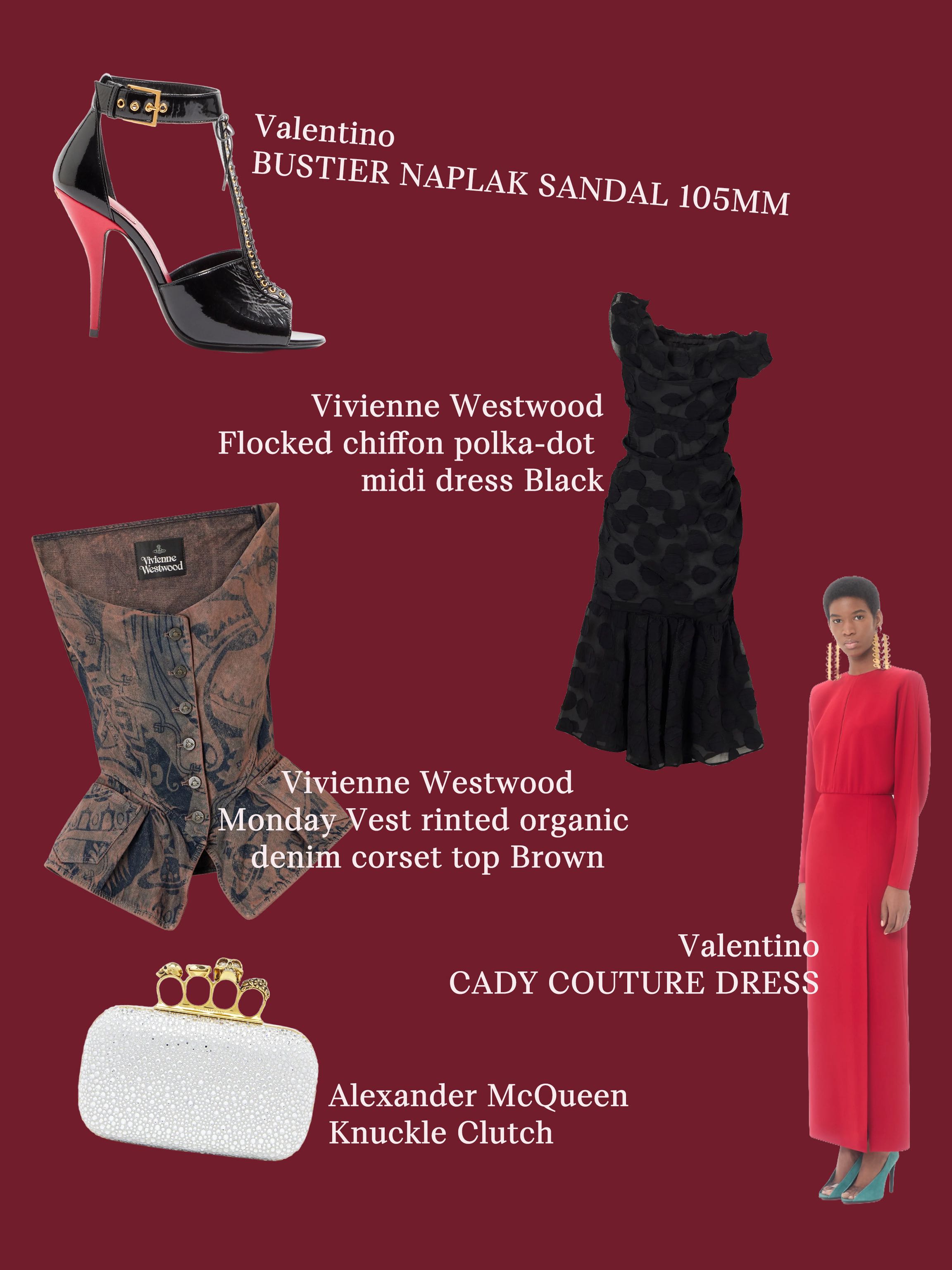
Valentino
BUSTIER NAPLAK SANDAL 105MM
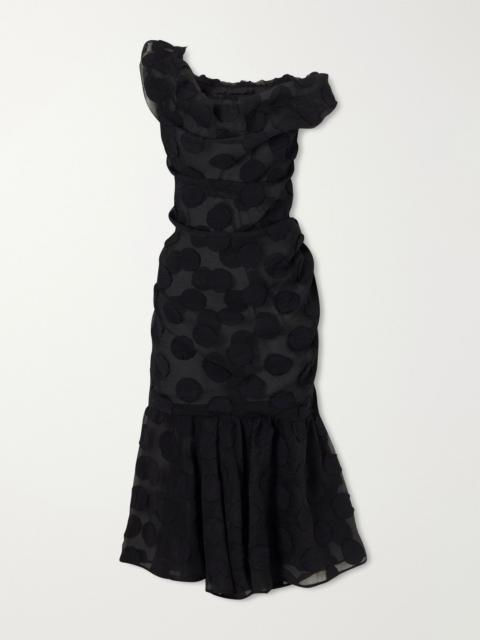
Vivienne Westwood
Flocked chiffon polka-dot midi dress Black
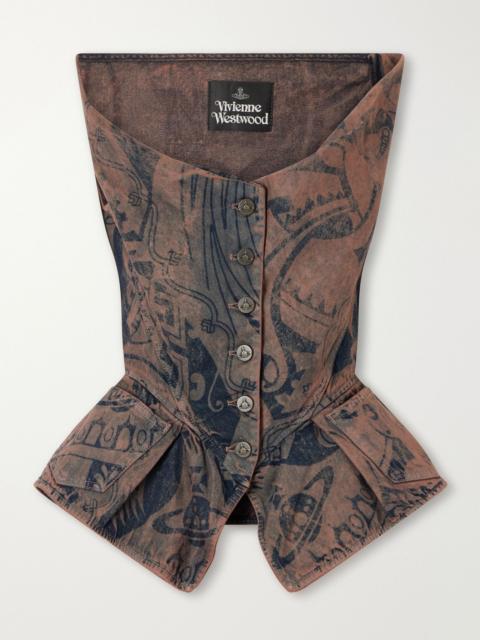
Vivienne Westwood
Monday Vest rinted organic denim corset top Brown

Valentino
CADY COUTURE DRESS
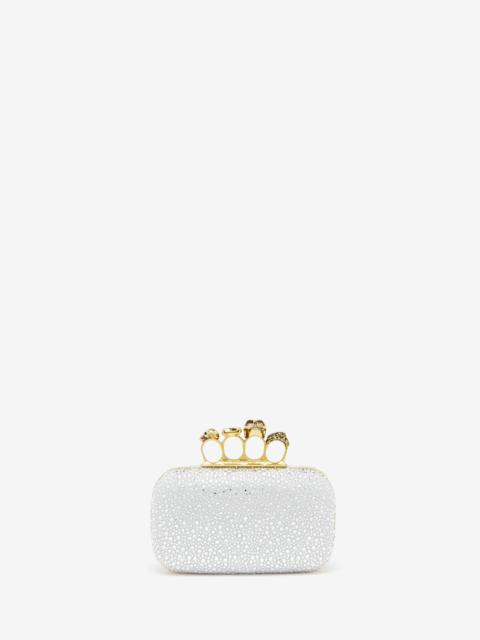
Alexander McQueen
Knuckle 클러치
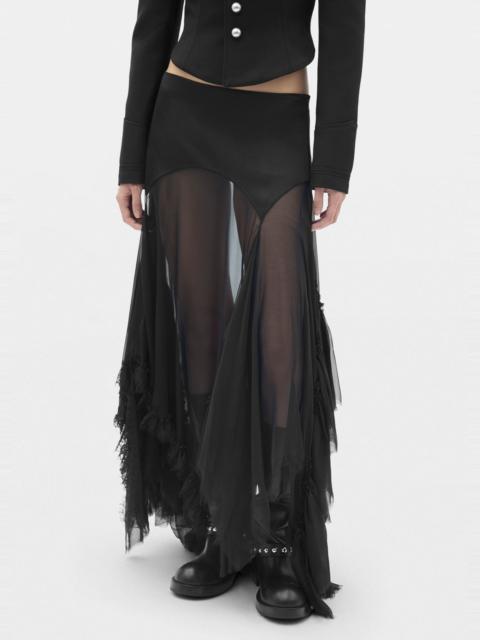
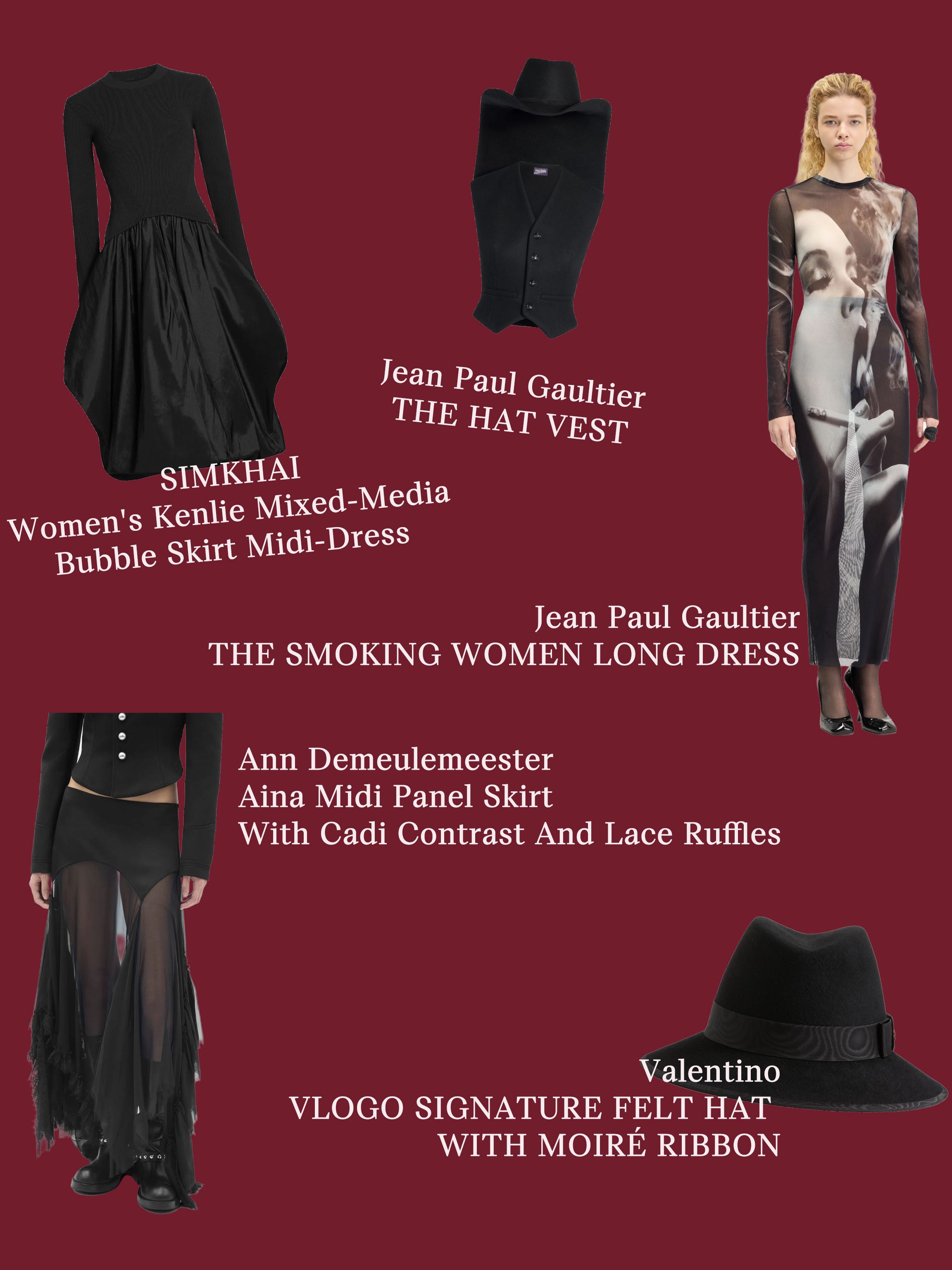
Ann Demeulemeester
Aina Midi Panel Skirt With Cadi Contrast And Lace Ruffles
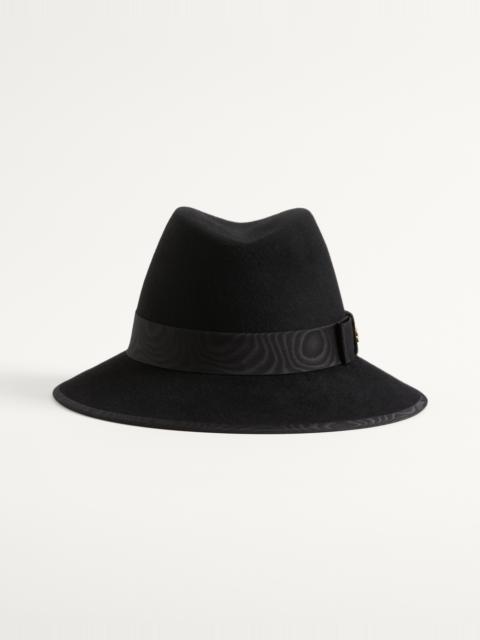
Valentino
VLOGO SIGNATURE FELT HAT WITH MOIRÉ RIBBON
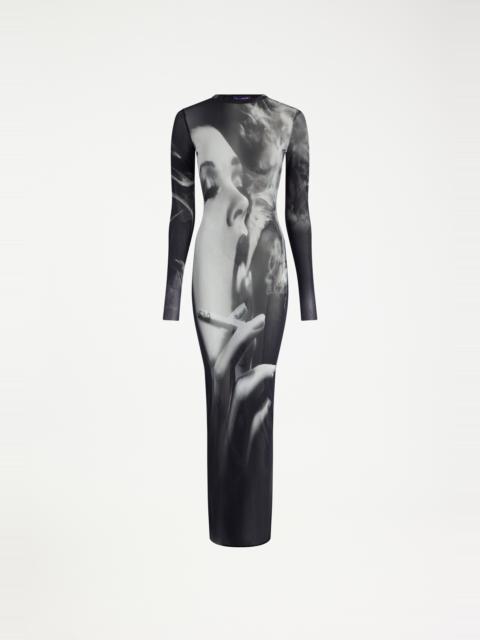
Jean Paul Gaultier
THE SMOKING WOMEN LONG DRESS
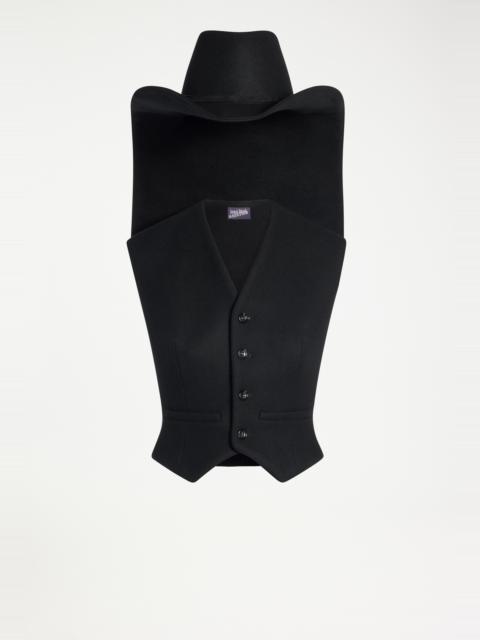
Jean Paul Gaultier
THE HAT VEST
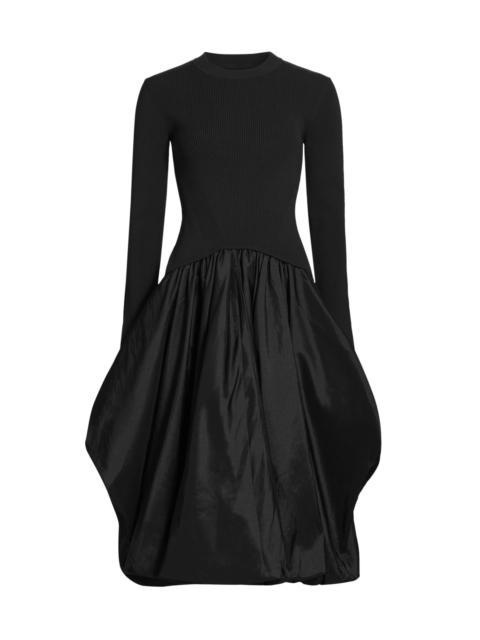
SIMKHAI
Kenlie 미디 드레스

Valentino
DANS LE FOYER SANDAL IN MOIRÉ FABRIC WITH FLORAL EMBROIDERY AND FEATHERS 105MM
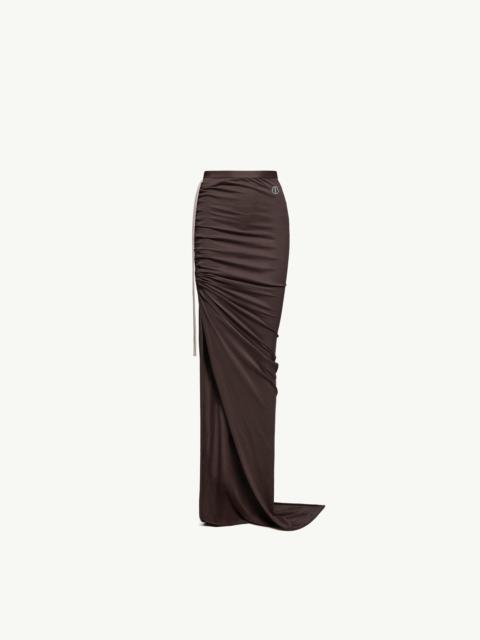
Moncler x Rick Owens
Moncler + Rick Owens Cotton Adjustable Skirt
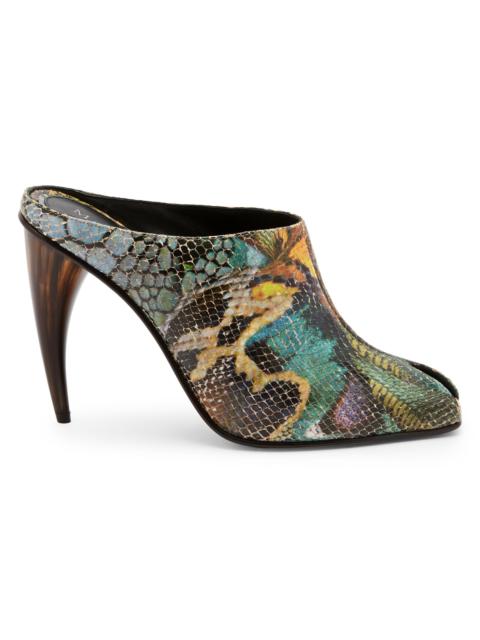
Alexander McQueen
Women's Horn 105MM Embossed-Leather Peep Toe Mules - Multicolor
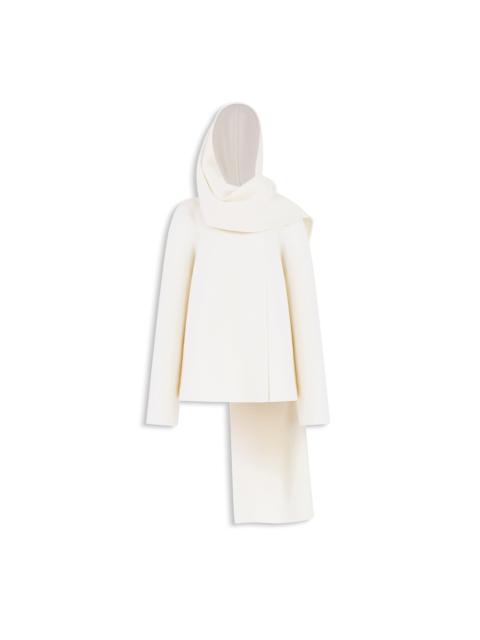
ALAÏA
WOOL SCARF COAT
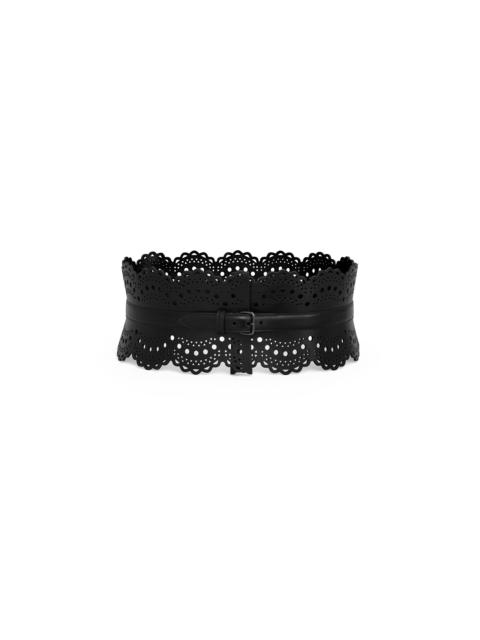
ALAÏA
BUSTIER BELT IN VIENNE WAVE CALFSKIN
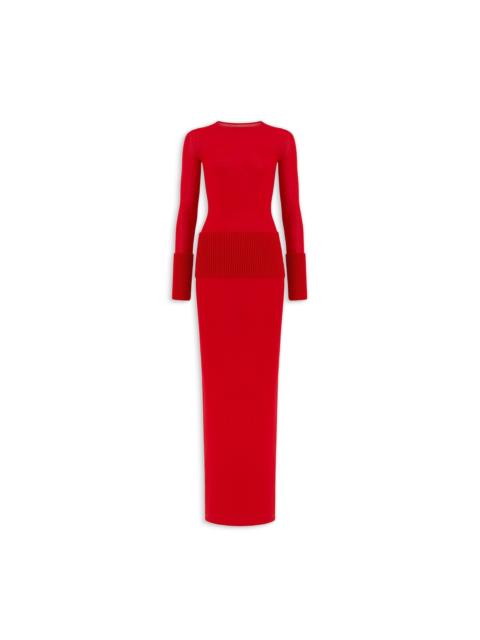
ALAÏA
MERINO BODYCON DRESS
- 댓글 없음
24 좋아한다
댓글 추가